
Prescott, AZ · Garage Door Service
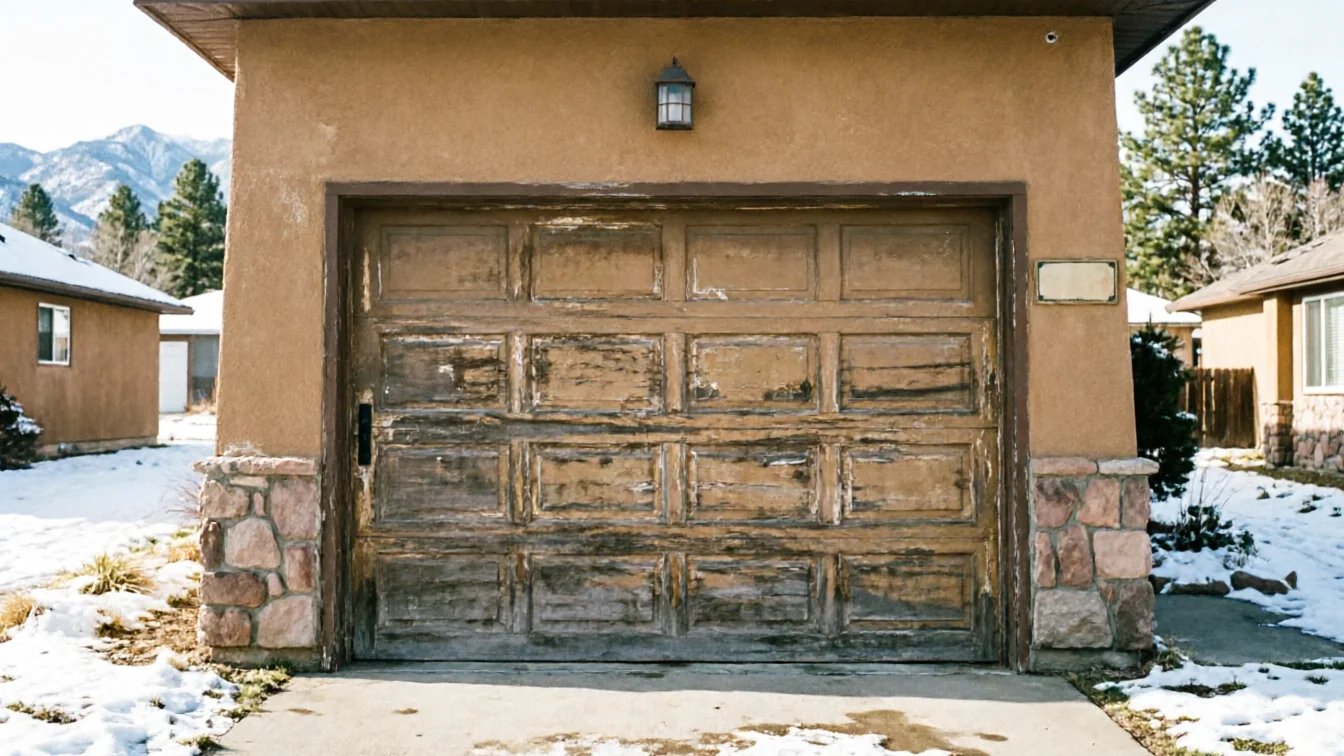
Is Your Garage Door Worth Fixing, or Is It Time to Replace It
Most Prescott homes date to 1987-1999. Here's how that housing age and our cold-moderate climate decide whether your garage door is worth repairing or replacing.
- Repairs & new doors
- Springs & openers
- Serving 4 nearby communities
What You Pay
We don't post a flat number here because what a door is worth fixing depends on what's actually broken and how old the rest of the system is. A torsion spring swap on a door from the 1990s is a different job than replacing rollers on a door that's already had two spring failures and a bent track. What we can tell you is that most houses in this area were built between 1987 and 1999, median right around 1995, so the doors and openers we're called out to are usually hitting the 25-to-35-year mark. At that age, a single repair might buy you a few more years, or it might be the first of three calls this year. We'll tell you straight which one it looks like before we quote anything, and if the honest answer is "replace it," we'll say that instead of patching something that's going to fail again next winter.
Income in this area runs a median of about $61,958, which is part of why a lot of owners want the fix-it-first conversation rather than jumping straight to a new door. That's a fair ask, and plenty of doors from this era still have good bones worth saving.
The Problem
The housing stock here skews heavily to that late-80s through late-90s build window, and most of what's still original on those garages is the opener and the spring system, not the door panels themselves. Steel sectional doors from that period hold up fine structurally, but the hardware that moves them - torsion springs rated for a certain cycle count, extension spring setups on older openers, galvanized cable that's been flexing for three decades - wears out on a schedule, not on a whim. A spring doesn't ask permission before it lets go, and it usually happens on the coldest morning of the year or the day before you need the car out.
The other problem is that a lot of these doors got their one obvious repair - a new opener, maybe, or a panel swap after a bump - without anyone looking at the track alignment or the spring tension underneath. That's the stuff that actually decides whether a door is worth saving. A door with a good panel and a worn-out spring is an easy yes. A door with rust through the bottom panel and a track that's been forced straight more than once usually isn't.
When It Stops Being a DIY Job
Torsion springs store enough force to break bones, and on a door this age, you don't know how many cycles are left in that spring until it's gone. We don't do remote phone diagnosis on spring tension or cable condition - that's a hands-on call, and we'll tell you if a job is outside what we handle, which does happen with some older opener models where parts aren't available anymore.
If the door is binding, slamming the last foot of travel, or the opener is straining and reversing on its own, stop opening it by remote and use the manual release until someone looks at it. Anything involving the springs, the cables, or the overhead track is where a DIY job on a 25-plus-year-old door turns into an ER visit. Panel cosmetics, weatherstripping, and lubrication are fine to handle yourself. The torsion system isn't, especially once the door's old enough that the spring was never replaced on a maintenance schedule in the first place.
What Local Conditions Do
Prescott sits in a cold-moderate climate band, and that matters more for a 30-year-old door than for a new one. Every freeze-thaw cycle through the winter works on rubber seals, bottom astragal, and any metal fatigue that's already started in an old spring or hinge. Steel contracts in the cold, which is exactly when a marginal spring is most likely to let go, and it's also when a worn bottom seal starts letting cold air and debris into the garage instead of keeping it out.
With 7,364 owner-occupied houses in this service area, most built in that same 1980s-90s window, a lot of doors around here are reaching the end of their hardware life on roughly the same timeline. That's not a coincidence of bad luck, it's just the housing stock aging together. If you're out toward Williamson, Chino Valley, Dewey-Humboldt, or Mayer, the pattern holds the same way - the age of the house tells you more about what's likely wrong with the door than anything else does.
Frequently asked questions
How do I know if my garage door is worth repairing or if I should replace it?
It depends on what's failed and what else is original. A worn spring or opener on a door with a sound panel and straight track is usually worth fixing. If you've already replaced the spring once, the track's been bent and straightened, or the bottom panel has rust through it, repair money is better spent toward a new door.
Why did my spring break in the middle of winter?
Cold makes steel contract, which adds stress to a spring that's already near the end of its cycle life. If your door is original to a house built in the 1987-1999 range common around here, the spring is likely original too, and winter mornings are when a tired spring finally gives out.
Can I replace a torsion spring myself?
We don't recommend it. A torsion spring holds enough stored force to cause serious injury if it's released or wound incorrectly, and on an older door you often can't tell how much life is left in it just by looking. Weatherstripping, lubrication, and hardware tightening are fine DIY tasks; the spring and cable system isn't.
Do you work outside Prescott itself?
Yes, we cover the surrounding area including Williamson, Chino Valley, Dewey-Humboldt, and Mayer. Houses in those areas tend to follow the same build-era pattern as Prescott, so the same questions about repair versus replace usually apply.
Related garage door services in Prescott
More garage door guides
Book garage door service in Prescott
Call now or request a quote - tell us what the door is doing and where you are.