
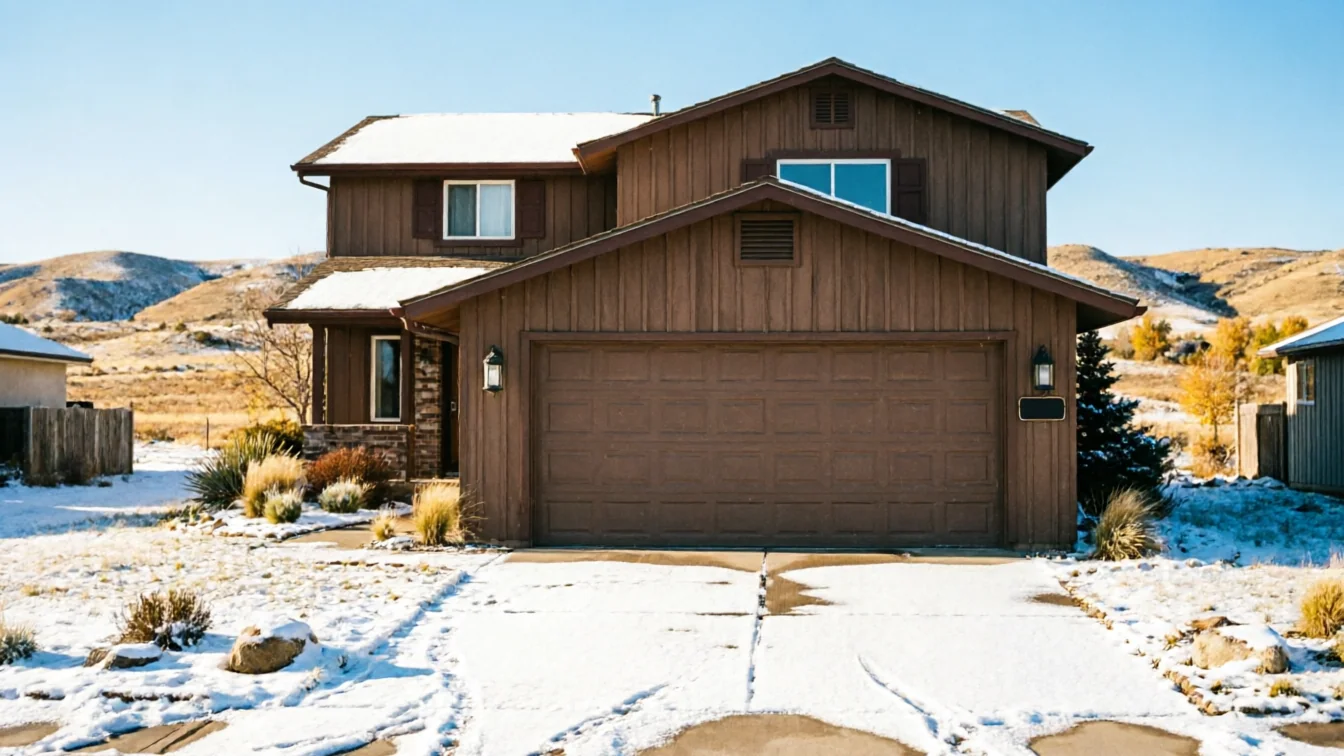
Prescott, AZ · Garage Door Service
What a 1990s-era Prescott garage actually needs now
Prescott homes built mostly 1987-1999 are hitting original-equipment age on openers and springs. Here's what that means for cost, timing, and when to call instead of DIY.
- Repairs & new doors
- Springs & openers
- Serving 4 nearby communities
What You Pay
We're not going to put a number here that isn't backed by a real quote, because what a job costs depends on what's actually wrong and what's on the door. What we can tell you is what drives the cost up or down in this area specifically. Most houses in this service area went up between 1987 and 1999, with the median landing around 1995. That means the opener motor and the torsion springs on a lot of these garages are the same ones that shipped with the house - pushing thirty years old on the early end of that range. A spring replacement on original hardware is usually straightforward. An opener replacement on original hardware sometimes isn't, because mounting brackets and rail lengths from that era don't always match what's sold today, and that can add labor time. If your door and opener are both original to a house built in the late 1980s, expect the estimate to cover more than just the broken part - the tech is going to check what else on that same install is close behind it.
With 7,364 owner-occupied houses out of 10,878 households in this area, a lot of what we see is exactly this: one original system, aging as a set, not as isolated failures.
The Problem
Prescott sits in a cold-moderate climate band, and that matters more for garage doors than people expect. Steel springs lose tension and flex differently in cold temperatures than they do in summer heat. When a spring goes in cold weather here, it's usually overnight or early morning, right when the metal has the least give left in it - and right when you're trying to get a vehicle out before work.
The other piece is age. A door and opener installed in 1995 has gone through roughly thirty winters of that temperature swing. Torsion springs are rated for a number of open-close cycles, not for a number of years, but cold cycling wears them faster than mild cycling does. A spring rated for ten years of average use in a warmer climate doesn't necessarily get ten years here. If your door's spring has never been replaced and your house falls in that 1987-1999 build window, it's closer to the end of its rated life than the calendar alone would suggest.
This isn't a reason to panic about every door in town. It's a reason to pay attention to the ones that are starting to sound different, lift slower, or hesitate on cold mornings - those are the ones with the least cycle life left.
When It Stops Being a DIY Job
A torsion spring under tension can put someone in the hospital. That's true everywhere, not just here, but it's worth saying plainly: if the spring is broken, coiled wrong, or you're not sure which kind you have, that's not a project for a Saturday with a socket set. Winding bars and the right torsion tube clamp aren't optional tools, they're the difference between a repair and an injury.
There's also an age factor specific to this area. On a door original to a house built in the 1980s or 90s, you're not always swapping one part for the same part. Track spacing, drum sizes, and cable gauges changed over that stretch of years, and guessing at a replacement part on hardware that old is how a DIY repair turns into two trips to the hardware store and a door that still doesn't track straight.
What you can reasonably do yourself: tightening loose roller brackets, lubricating hinges and tracks, checking that the auto-reverse safety sensors are clean and aligned. What you shouldn't: anything involving the torsion spring, the cable drums, or an opener that's seized under load. If you're not sure which category your problem falls into, that uncertainty is itself the answer - call it in.
What Local Conditions Do
Cold-moderate winters do two specific things to a garage door system here. First, they stiffen lubricant - grease that moves fine on tracks and hinges in August can gum up and slow the door's travel in January, which puts extra load on the opener motor every single cycle. Second, they contract metal slightly, which changes the tension balance on a spring that's already near the end of its service life. Neither of these is dramatic on its own, but on a thirty-year-old system they compound.
The practical response is seasonal, not constant. Switching to a lubricant rated for lower temperatures before winter, and checking spring balance once a year rather than waiting for a failure, catches most of what cold weather does to older hardware before it becomes a 6 a.m. call. This matters more here than it would in a warmer climate band, and it matters more on a 1980s-90s door than on a door installed in the last ten years with updated hardware.
We work this area and the towns around it - Williamson 9 miles out, Chino Valley at 10, Dewey-Humboldt at 12, and Mayer at 16 - and the housing age and climate pattern holds across most of that stretch, so the same seasonal checks apply whether you're close in or further out.
Frequently asked questions
How old does a garage door spring have to be before I should worry about it?
There's no fixed age - it's about cycle count, not calendar years. But if your house was built in the 1987-1999 window common to this area and the spring has never been replaced, it's reasonable to have it checked, especially before winter when cold cycling adds extra wear.
Can I replace a torsion spring myself?
We don't recommend it. A torsion spring under tension can cause serious injury if the winding bars slip or the wrong size is used. On older hardware specific to this area, drum and cable sizing can also differ from what's sold today, which makes a DIY swap riskier than it looks.
Why does my door seem worse in winter?
Cold temperatures stiffen lubricant and slightly change spring tension, so a door that's a little worn shows it more in January than in July. On a system original to a house built in the late 1980s or 90s, that seasonal strain lands on parts that already have a lot of cycles on them.
Do you serve towns outside Prescott?
Yes - we cover the surrounding area including Williamson, Chino Valley, Dewey-Humboldt, and Mayer. The housing age and winter conditions are similar across that stretch, so the same maintenance advice generally applies.
Related garage door services in Prescott
More garage door guides
Book garage door service in Prescott
Call now or request a quote - tell us what the door is doing and where you are.